
ADDRESS BY THE PROVINCIAL CHAIRPERSON
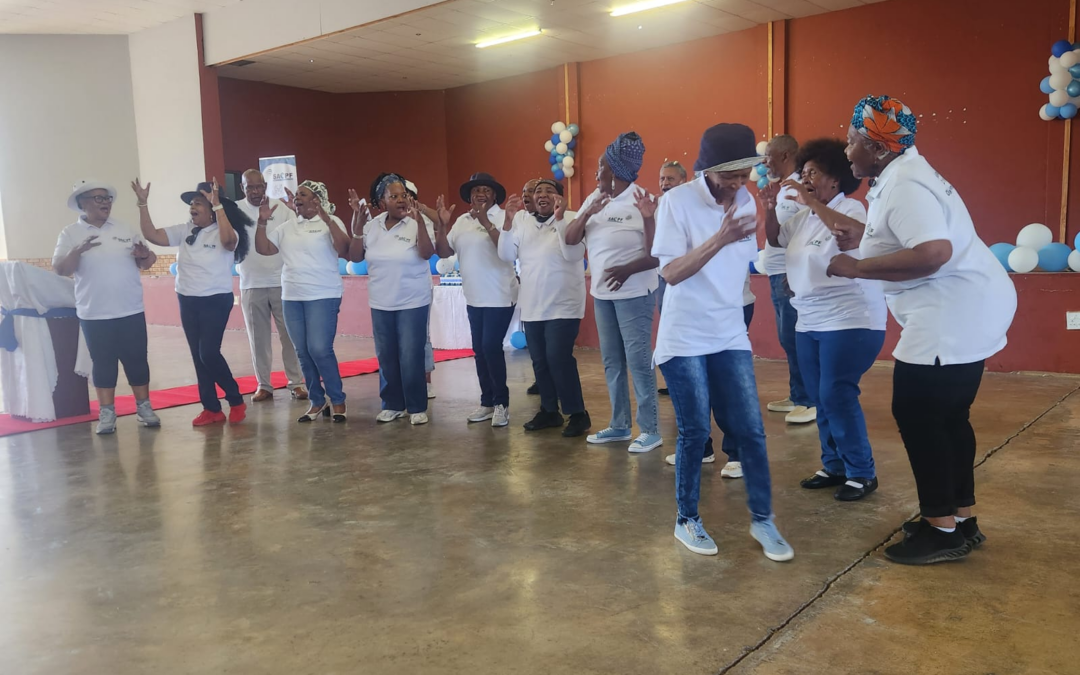
An Anniversary Celebration by Ward 10 of the North West Forum
Programme Director
Chairperson of the Ward 10 Older Persons Forum, Ms Mmapule Matjitji,
The NWSCF Provincial Treasurer, Moruti Patrick Madito
Members of the Local and Provincial Older Persons Forum present,
Esteemed Members of the Ward 10 Older Persons Forum Leadership
Government Officials present
All Guests invited
Ladies and Gentlemen.
Programme Director, it gives me great pleasure to stand before you all, as both the National and Provincial Chairperson of the Older Persons Forum. I am a witness to the efforts and passion demonstrated by older persons in this Ward, towards making Ward 10 Older Persons Forum successful to this end, and I wish you all the success you deserve for the future. Your success indeed attests to the assertions by people who say: “Aging is not lost youth, but a new stage of opportunity and strength.” Also that “You are never too old to set another goal or to dream a new dream.” The role you play also reminds us of Rolihlahla Mandela’s famous submissions during the United Nations International Year of Older Persons, on the 17 December 1998 when he said that “a society that does not value its older people denies its roots and endangers its future.”
The President of India, Mr Shri Pranab Mukherjee also once said that the “society and government should be sensitized to the fact that old age is just another phase of life, with its special needs and characteristics like childhood and youth. He also said that the younger people should get to know how the world appears to the elderly; because that is the future of the youth. Mukherjee also said that the elderly should be encouraged to get out of a ‘retirement mentality’ and think about old age as a second inning, an opportunity to complete so many unfinished tasks and expand horizons, to look beyond the self and the family and work for community. Active participation and involvement in society is the mantra which can ensure independence, dignity and self – fulfilment”.
In this regard Programme Director, I wish to indicate my gratitude for the role that the elderlies of Ward 10 have chosen to fulfil their dreams and to continue to chart the path for the youth into the future. We must always remind ourselves of some of the submissions contained within the Madrid International Plan of Active Ageing as signed in April of 2002 by the late Mr Kofi Annan, who served as the UN General Secretary, that states under Article 10 of its Political Declaration that “the potential of older persons is a powerful basis for future development. This enables society to rely increasingly on the skills, experience and wisdom of older persons, not only to take the lead in their own betterment but also to participate actively in that of society as a whole”.
We also make reference to Article 12 that says that: The expectations of older persons and the economic needs of society demand that older persons be able to participate in the economic, political, social and cultural life of their societies and that older persons should have the opportunity to work for as long as they wish and are able to, in satisfying and productive work, continuing to have access to education and training programmes”, and this is the reason that we had demanded that the practice of ageism be criminalized.
Programme Director, I must again commend the determination and the resoluteness of the elderlies of Ward 10 to succeed and be exemplary in demonstrating what collectively can be achieved by members of the society when there is harmony, I can attest to the fact that this is the only Ward Forum that exists in the whole country, and I am proud as both the National and Provincial Chairperson to be residing in this Ward.
One of the things that is remarkable that should be attributed to yourselves is the fact that you are self-reliant and not dependent on government for resources. I suppose this is a trait that can be associated with an environment that consists of educated people who have an understanding of ageing and mutual dependency in dealing with the intricacies of life. It suffices to say that age and death are a passing show in your life and have no respect for money and status you command. As indicated by gerontologists, there are three stages in ageing which we need to familiarize ourselves which are:
- The Young-Old Stage (Ages 65–74)
During this stage, most individuals remain physically vigorous, independent, and socially engaged and this period frequently centres’ on retirement adjustments and finding new personal or community roles.
- The Middle-Old Stage (Ages 75–84)
Where we start to notice declines in stamina, sensory acuity (vision and hearing), and muscle strength become more pronounced where daily routines may require minor modifications or assistance, and management of multiple medications becomes common.
- The Oldest-Old Stage (Ages 85+)
This is the last stage of frailty and a higher incidence of complex chronic illnesses or cognitive impairment. At this stage, most individuals require structured support, assisted living, or full-time personal care for daily activities.
Programme Director, we should always note that Article 13 of the MIPPA Political Declaration also stresses the primary responsibility of Governments in promoting, providing and ensuring access to basic social services, and also bearing in mind specific needs of older persons. We must also remind ourselves that this is what is captured under section 4 of the Older Persons Amendment Act 1 of 2005 that directs that “all organs of state and all officials, employees and representatives of organs of state and stakeholders must respect, protect and promote the rights of older persons contained in the Act and that “we need to work together with local authorities, civil society, including non-governmental organizations, the private sector, volunteers and voluntary organizations, older persons themselves and associations for and of older persons, as well as families and communities” in achieving the goals.
It is however regrettable that these directives look good on paper and are never fulfilled by the State. We have come to accept that South Africa has some of the best policies in life towards protecting its citizens, but very much lacking in their implementation. We are most of the time very much disappointed by the kind of attitudes and services we receive in our government institutions and service points as older persons. We are disappointed by the lack of education and awareness that has to be created by government to its institutions on the rights and sensitivity towards handling of older persons.
I will also continue to lament the fact that this Ward, features in it a tertiary institution, which in my view, should be allowing its students to research issues relating to gerontology, its impact on family lives as well as using the Wards around it as a training environment a process that would relate to a gainful and symbiotic relationship between the institution and the society around it. Madam Chairperson, probably this should also be part of the agenda as we have a meeting lined up with the Vice Chancellor on the 25th August, which is next week.
As the Older Persons Forum however, we must not forget that we are the voice and representative of especially those who fall under category C, which relates to our frail members in need of daily support. We have amongst others older persons who require daily assistance and according to a submission made by Business Tech a while ago, cost of living for a older persons varies significantly based on their health, lifestyle, and whether they remain at home or move to a retirement community. They say that staying at home can incur costs for home maintenance, aging-in-place modifications, and potentially hiring help for daily tasks, while assisted living facilities typically range from R10,000 to R35,000 per month and can include accommodation, meals, and assistance.
We could also encourage our youth to register for training in Home Base Care at the Department of Social Development. This will serve two purposes in terms of employment creation and the availability of services for our frail members within the Ward and I will encourage the Forum Leadership to explore this avenue as there are sporadic cases being identified and reported of elderly people who lack assistance.
In conclusion Programme Director, May I inform your good selves, everything going well that through the SAOPF, I have again been invited to be part of the Asia-Pacific Regional Conference on Population Ageing 2026 which will be taking place from the 27th to the 30th October 2026 in Hangzhou, Zhejiang Province in China. The Conference theme is “Integration, Innovation and Sustainability: A Shared Agenda for Population Ageing.” The Conference discussions derive from the fact that population ageing is not only about pensions or health and care demands, but virtually also affects every part of society.
The Conference influences how cities are designed, how economies function, how people work and retire, how healthcare systems operate, how educational systems unfold, how technology is used and even how generations relate to one another. In this regard therefore, it is said that adapting to population ageing requires a whole-of-government and whole-of-society response.
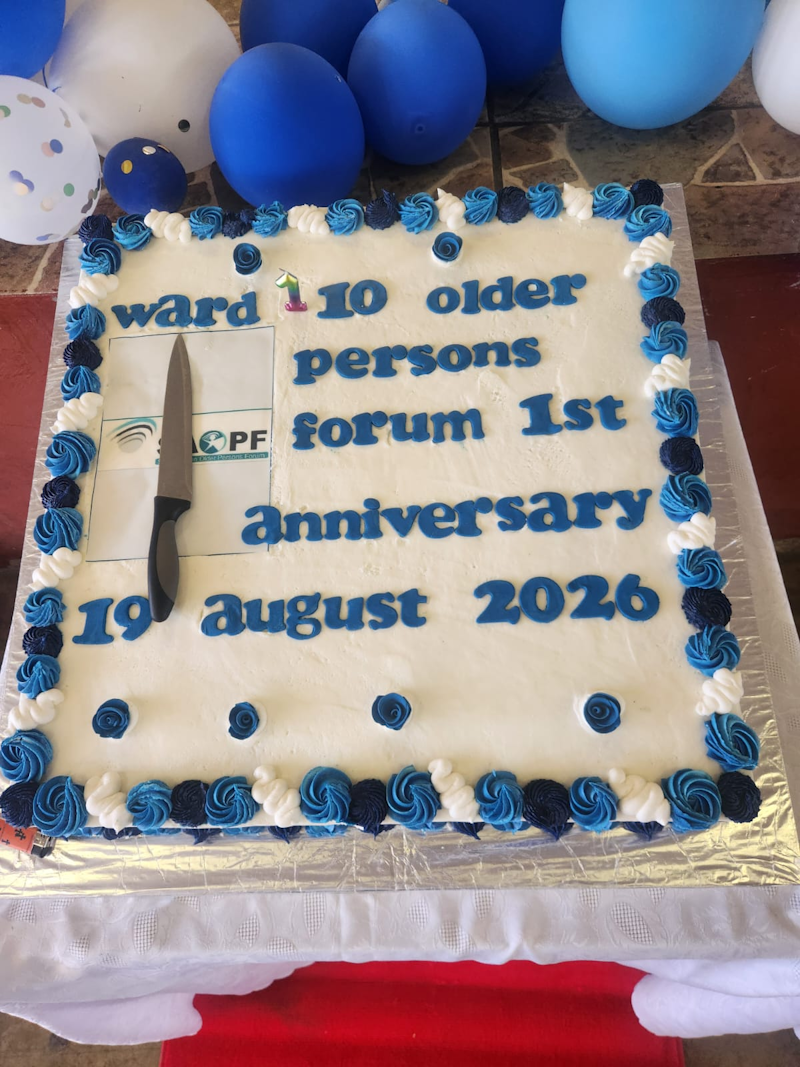
With these few words, I wish to once more conclude by wishing Ward 10 Older Persons Forum in Mahikeng a happy anniversary and everything that is best for the future. It is my wish that the torch that you are bearing, must shine for all other 244 Wards in the country.
I thank you.
Ward 10

Ward 10 2

Ward 10 4
